Artículo: The Ballet Flat Has Taken Over the Shoe Wall
The Ballet Flat Has Taken Over the Shoe Wall
Once dismissed as delicate, impractical and too sweet, the ballet flat has become the footwear trend every brand wants to reinterpret. Now Birkenstock, Crocs and Ugg are turning the slipper-like silhouette into clogs, molded flats and sneaker hybrids, proof that comfort brands are no longer watching fashion trends from the sidelines.

The ballet flat is no longer just a ballet flat.
It is a Croc.
It is a Birkenstock.
It is an Ugg sneaker.
It is a Mary Jane, a mesh slipper, a satin runway shoe, a jelly flat, a high-vamp pump, a studded downtown accessory and a soft leather office staple.
What began as a delicate, dancer-inspired shoe has become one of the most commercially flexible footwear trends of the decade. Ballet flats are now so popular that brands once known for comfort, orthopedic credibility, clogs and foam shoes are reshaping their own identities around the silhouette. Birkenstock has teamed with French dance-shoe house Repetto. Crocs has pushed its Brooklyn Flat into the market. Ugg has leaned into ballet-inspired sneaker shapes. Even running and sportswear brands have been pulled into the “sneakerina” category - part sneaker, part ballerina flat, part fashion experiment.
The result is a strange but revealing footwear moment: the daintiest shoe in the closet has become a business opportunity for some of the least delicate brands in footwear.
That contradiction is exactly why the trend is working.
Fashion has spent the past several years moving away from hard divisions. Sneakers are dress shoes now. Clogs are status items. Loafers are streetwear. Performance brands make lifestyle shoes. Luxury brands make hiking sandals. The ballet flat fits perfectly into that blurred market because it can be styled as polished, nostalgic, feminine, minimalist, practical or ironic, depending on the customer.
It is also a response to exhaustion.
After years of giant sneakers, platform boots, lug soles and intentionally heavy shoes, the ballet flat offers lightness. It gives shoppers a low-profile shape that works with jeans, trousers, skirts, dresses and oversized tailoring. It looks elegant without requiring a heel. It can be folded into quiet luxury, downtown cool, balletcore, office dressing or travel wardrobes. It has enough history to feel classic and enough reinvention to feel current.
That is why brands are not merely selling ballet flats. They are translating the idea of the ballet flat into their own language.
Crocs’ version looks like exactly what it is: a classic flat filtered through the molded comfort universe that made the company famous. Its Brooklyn Flat takes cues from ballet, but it does not pretend to be a traditional leather slipper. It is lightweight, molded, playful and built around Crocs’ comfort proposition. In other words, Crocs is not trying to become Repetto. It is trying to make the ballet flat behave like Crocs.
That matters commercially because Crocs has spent years proving that ugly, practical or unconventional shoes can become fashionable when the cultural timing is right. The brand understands irony, comfort and customization better than many traditional shoe companies. If the ballet flat is the trend of the moment, Crocs’ challenge is not whether it can make a pretty flat. The challenge is whether it can make a flat that feels enough like Crocs to be credible and enough like fashion to be desirable.
Early signs suggest demand is real. Crocs executives have said the company’s ballet flat has seen notable sellouts globally, especially in Asia. That is important because Asia has been a key region for fashion-forward footwear hybrids, from mesh flats to Mary Jane sneakers to low-profile casual shoes that bridge cuteness and utility.
Birkenstock’s move is more refined and more symbolic.
The German brand has spent years transforming from comfort sandal to global fashion object. Its Arizona and Boston styles became staples not by hiding their orthopedic DNA, but by making that DNA fashionable. The collaboration with Repetto, the French dance-shoe company founded in 1947 and deeply associated with ballet footwear, brings Birkenstock into the balletcore conversation without asking it to abandon its own shape.
The most talked-about style is not a simple flat. It is a ballet-clog hybrid, complete with soft color, ribbon detail and the unmistakable Birkenstock footbed language. It is both graceful and awkward, elegant and chunky, expensive and oddly charming. That tension is the point. Fashion is not asking Birkenstock to make a pure ballet slipper. It is asking Birkenstock to make a Birkenstock that understands ballet.
Ugg’s contribution comes through the sneakerina lane. The brand’s Quill and Zora styles sit closer to the sporty side of the trend, blending ballet-inspired details with cushioned, casual construction. That makes sense for Ugg, a company built around comfort, softness and lifestyle dressing. A true ballet flat might be too thin for Ugg’s identity. A ballet sneaker allows the brand to participate without losing its promise of comfort.
Together, these moves show how powerful the ballet flat has become as a design code.
A bow, a strap, a low vamp, a rounded or squared toe, a ribbon, a soft upper, a slipper shape, any one of these details can signal ballet even when the shoe itself is technically a clog, sneaker or molded flat. The ballet flat has become a visual language that brands can borrow, remix and commercialize.
This is why the trend has outlasted the first wave of balletcore.
Balletcore originally leaned heavily on ribbons, wrap sweaters, pale pink, leg warmers, satin, tulle and dancer nostalgia. It could have faded quickly as another social-media aesthetic. Instead, the footwear survived because it solved a real wardrobe problem. People wanted something flatter and easier than heels, more polished than sneakers, softer than loafers and less aggressive than boots.
That need is broader than any microtrend.
The classic ballet flat also benefits from the way women dress now. Oversized trousers need a low shoe that does not fight the silhouette. Wide-leg jeans look sharper when grounded by something slim. Long skirts can feel modern with a flat instead of a sandal. Office outfits have become more flexible, making a comfortable but polished shoe more useful than a formal pump. Travel wardrobes now prioritize shoes that can walk all day without looking like athletic footwear.
Ballet flats meet those needs- at least in theory.
Their traditional weakness has always been comfort. Many classic ballet flats offer little arch support, thin soles and minimal structure. They look easy but can be punishing after hours of walking. That weakness created the opening for comfort brands. Birkenstock, Crocs and Ugg are not entering the trend despite their comfort reputations. They are entering because of them.
They can argue that the ballet flat was waiting to be rebuilt.
That is the commercial opportunity. A shopper may love the look of a classic flat but need more cushioning, more support or easier materials. Crocs can offer molded comfort. Birkenstock can offer footbed credibility. Ugg can offer padded casual construction. The brands are not merely copying fashion; they are correcting what some shoppers dislike about fashion.
This also explains why ballet sneakers, or “sneakerinas,” have become a major offshoot. The sneakerina keeps the slim, feminine, ballet-adjacent appearance but adds athletic comfort and casual styling. It is less precious than a satin flat and easier to wear than a traditional ballerina slipper. It also fits the larger consumer shift toward hybrid shoes that do not stay in one category.
The trend’s reach across price points is especially important.
Luxury brands can sell soft leather flats for hundreds or even more than a thousand dollars. Mass brands can sell affordable mesh, jelly or Mary Jane versions. Comfort brands can position their versions as practical investments. Sportswear brands can make ballet sneakers. Retailers can use the silhouette to refresh shoe walls without requiring customers to learn a completely unfamiliar shape.
That breadth gives the trend staying power. A trend limited to runway brands burns bright and fades. A trend that spreads across Crocs, Birkenstock, Ugg, Zara-style retailers, department stores, luxury houses and TikTok closets becomes infrastructure.
There is also a business reason brands want in.
Footwear companies are operating in a market where consumers remain cautious, tariffs and supply-chain costs have pressured margins, and shoppers are selective about discretionary purchases. A trend that persuades people to buy an additional pair of shoes - not a replacement running sneaker, not a seasonal boot, but a new style category is valuable. Ballet flats can be sold as everyday essentials, occasion shoes, travel shoes, office shoes and fashion statements.
For Crocs, a ballet flat expands the brand beyond the classic clog while keeping its comfort personality. For Birkenstock, a ballet collaboration strengthens fashion credibility and supports premium pricing. For Ugg, ballet sneakers help the brand stay relevant beyond winter boots and slippers. Each company is using the trend to stretch, not erase, its identity.
The risk is overextension.
When every brand tries to cash in on the same trend, the market can quickly become crowded. Not every ballet hybrid will make sense. Some will look gimmicky. Some will fail on comfort. Some will fail on proportion. A ballet flat is unforgiving because small details matter: toe shape, vamp height, heel structure, strap placement, material softness and how the shoe sits with the foot. A clumsy version can look childish or costume-like. A bad sneakerina can look like two shoes forced together.
The best versions understand restraint.
A ballet-inspired Birkenstock should not pretend to be a pointe shoe. A Crocs flat should not pretend to be Parisian leather luxury. An Ugg sneakerina should not abandon the softness that makes Ugg appealing. The strongest designs translate the trend through the brand’s own grammar.
That is why the ballet-flat boom reveals something bigger about fashion in 2026. Consumers no longer want only purity. They want contradiction. They want shoes that are comfortable but polished, nostalgic but modern, ugly but cute, practical but trend-aware. They want a shoe that can look intentional without making the day harder.
The ballet flat answers that emotional demand.
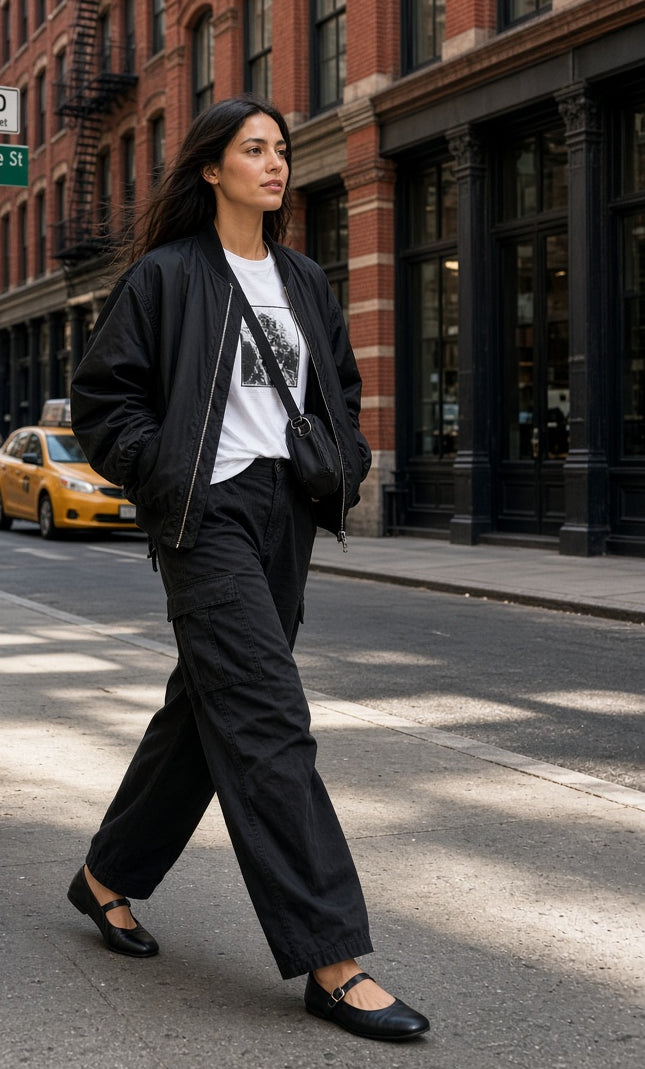
It is also a reaction against the idea that femininity must be uncomfortable. The flat has always carried a delicate image, but the new generation is less fragile. Studs, mesh, square toes, Mary Jane straps, sneaker soles, molded TPU, clogs and footbeds have made the category tougher and more wearable. The ballet flat is no longer only for a soft outfit. It can sit under barrel jeans, cargos, tailored trousers, denim shorts or a slip skirt.
That flexibility is what brands are buying into.
The trend may eventually cool, but it is unlikely to vanish. Ballet flats have left and returned before. Their shape is too simple, too useful and too culturally embedded to disappear permanently. What is different now is the number of brands rewriting the shoe for different customers.
The classic leather flat will remain.
The sneakerina will keep evolving.
The comfort ballet flat will grow.
The ugly ballet hybrid will divide shoppers.
The luxury version will keep its place in minimalist wardrobes.
The ballet flat has become less a single shoe than a platform.
That is why Crocs and Birkenstock matter to the story. Their participation signals that the trend has crossed from fashion enthusiasm into mainstream product strategy. When the clog companies arrive, the trend is no longer confined to runway girls and downtown shoppers. It has reached the boardroom, the earnings call and the mass consumer.
The shoe that once whispered has become a market signal.
For fashion editors, it is a styling story.
For shoppers, it is a comfort question.
For brands, it is a revenue opportunity.
For the industry, it is proof that the next major trend may not be new at all - it may be an old silhouette rebuilt for modern life.
The ballet flat did not simply come back.
It multiplied.